
.png)
What Affects an EPC Rating? How to Improve Your Property’s Energy Efficiency
If you’re selling, renting or improving a property, you may be wondering what affects an EPC rating and what you can do to achieve a better score.

An Energy Performance Certificate (EPC) gives a property an energy efficiency rating from A to G, with A representing the most energy efficient properties and G the least efficient. However, an EPC rating is influenced by considerably more than simply how much energy you use.
Everything from the age and construction of the property to its insulation, heating system, windows, lighting and renewable technologies can affect the final EPC score.
At EcoRate Anglia, we carry out domestic EPC assessments across Suffolk, Norfolk, Cambridgeshire and Essex. Here we explain some of the biggest factors affecting an EPC rating – including the increasingly common question of how much solar panels and battery storage can improve an EPC.
What Does an EPC Actually Measure?
An EPC assesses the energy performance of the property using a standardised methodology.
For an existing home, the assessor records information about the building and its energy-related features. This information is then used to calculate an energy efficiency score.
The final score places the property into one of seven bands:
A – 92 to 100+
B – 81 to 91
C – 69 to 80
D – 55 to 68
E – 39 to 54
F – 21 to 38
G – 1 to 20
Importantly, your EPC isn't based on your actual gas or electricity bills.
Instead, the calculation assumes standard occupancy and usage. This allows one property to be compared fairly with another.

So, what actually affects the score?
1. Wall Construction and Insulation

The walls of a property can have a significant influence on its EPC rating because a substantial amount of heat can be lost through poorly insulated walls.
During an EPC assessment, we look at factors including:
The approximate age of the property
Wall construction
Wall thickness
Whether walls are solid or cavity
Whether cavity wall insulation is present
Internal or external wall insulation
Extensions and different construction types
A modern insulated cavity wall will generally perform considerably better than an older uninsulated solid wall.
For older properties, installing internal or external solid wall insulation can therefore potentially make a significant difference to their energy performance.
2. Loft and Roof Insulation

Heat rises, which makes the roof another important part of a home's thermal envelope.
The EPC assessment considers the type and amount of insulation present within accessible loft spaces and other roof structures.
A loft with little or no insulation can negatively affect an EPC, while increasing insulation can improve the property's calculated energy efficiency.
Where possible, it's also useful to have evidence of insulation that cannot be directly inspected by the assessor.
3. The Property's Main Heating System

Heating is one of the most important elements of an EPC assessment. The calculation takes into account the type of heating system installed, it's age, its efficiency and the fuel being used.
This could include:
Gas boilers
Oil boilers
LPG boilers
Electric heating
Storage heaters
Air source heat pumps
Ground source heat pumps
Biomass systems
An older, inefficient heating system can have a considerable effect on the overall rating. However, replacing one heating system with another doesn't automatically guarantee a dramatic EPC improvement. The result depends on the property and the particular system being installed.
4. Heating Controls

The heating system itself is only part of the equation. Heating controls can also affect an EPC rating.
Depending on the system, our assessor will record features such as:
Programmer or timer
Room thermostat
Thermostatic radiator valves (TRVs)
Time and temperature zone controls
Smart heating controls where applicable
The sweet spot is having a programmer, room thermostat and Thermostatic Radiator Valves on more than 50% of the radiators (less than 50% and we cannot record them as present). Zone controlled thermostats and programmers score the highest, however if a property only has two or one of the aforementioned heating controls it wil likely score lower.
Good heating controls allow the property to heat rooms more efficiently rather than unnecessarily heating the entire building. For some properties, improving heating controls can therefore be a relatively inexpensive way of helping improve energy efficiency.
5. Windows and Glazing

Windows are another factor considered during an EPC assessment. We record details such as whether the property has:
Single glazing
Double glazing
Triple glazing
Secondary glazing
The age and type of glazing may also be relevant. Replacing old single-glazed windows with modern double or triple glazing can reduce heat loss and may improve the EPC rating.
However, homeowners are sometimes surprised to find that replacing relatively modern double glazing with newer double glazing doesn't transform their EPC score.
That's because the property is assessed as a whole, and improvements should ideally be targeted at the areas where the greatest energy losses occur.
6. Hot Water System

How your property produces and stores hot water also forms part of the EPC assessment. This can include the main heat source, hot water cylinder and insulation surrounding the cylinder.
For properties with stored hot water, the level of cylinder insulation can therefore make a difference. Solar water heating systems can also be taken into account.
7. Low-Energy Lighting

One of the simplest areas homeowners can address is lighting. During a domestic EPC assessment, the assessor records the number of fixed lighting outlets and the proportion fitted with low-energy lighting.
LED bulbs use considerably less electricity than traditional incandescent or halogen bulbs. Changing remaining halogen or traditional bulbs to LEDs is relatively inexpensive and can help the EPC calculation.
It probably won't transform an E-rated property into a B on its own, but when you're close to the boundary between two EPC bands, smaller improvements can become particularly worthwhile.
8. Floor Construction and Insulation

Floors are often overlooked when people think about EPCs. The assessment considers the construction of the floor and, where appropriate, whether insulation is present.
This could include:
Suspended timber floors
Solid floors
Insulated floors
Floors above unheated spaces
Insulating a suspended timber floor or other poorly insulated floor can reduce heat loss and potentially contribute towards a better EPC rating.
9. Property Age, Size and Construction
Two houses with identical boilers and windows can still achieve different EPC ratings.
That's because the EPC considers the property as a complete building.
Factors such as the below can all influence the calculation:
Property age
Detached, semi-detached or terraced construction
Floor area
Number of exposed walls
Extensions
Roof construction
Wall construction
Heat-loss perimeter
A detached house, for example, generally has more external surface area through which heat can escape than an equivalent mid-terrace property. This is one reason it's difficult to predict an EPC rating simply by looking at a list of improvements.
10. Do Solar Panels Improve an EPC Rating?

Yes....
Solar photovoltaic (PV) panels can improve an EPC rating – and in some properties the difference can be significant.
Solar PV generates electricity at the property, reducing the amount of electricity the home is calculated to require from the grid.
The effect on the EPC depends on factors including the solar PV system itself and the property it's installed on.
For example, the calculation may take into account information such as:
Size of the solar PV array
System output
Orientation
Inclination
Overshading
How the system is connected to the dwelling
The exact EPC improvement varies from property to property. There isn't a reliable rule that says installing a certain number of panels will add a fixed number of EPC points.
However, solar PV can potentially move a property several EPC points and, in the right circumstances, contribute towards moving the property into the next EPC band.
For a property sitting close to the boundary between a D and C, for example, solar PV could potentially be particularly valuable as part of a wider package of improvements.
Solar PV is also regularly included among potential improvements on EPC recommendation reports.
How Much Can Solar Panels Improve an EPC?

This is one of the most common questions we're asked, but there isn't a single answer.
Imagine two homes both install the same solar PV system. One might already be highly insulated with an efficient heating system and achieve a relatively modest improvement.
Another property could see a more noticeable change.
The EPC calculation considers all of the property's characteristics together. As a result, the best way to establish the potential effect of solar panels is to model the individual property rather than relying on a generic estimate.
For landlords in particular, this can be useful when trying to move a property across an EPC band. Rather than spending money on improvements without knowing the likely result, an energy assessment can help identify where investment may have the greatest impact.
Do Solar Batteries Improve an EPC Rating?
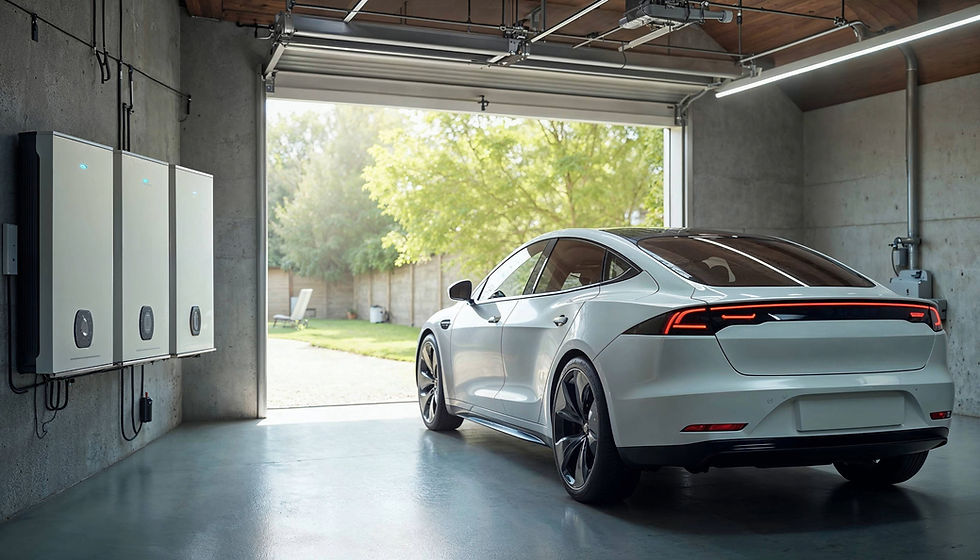
Battery storage is becoming increasingly common alongside solar PV. A home battery allows electricity generated by solar panels to be stored and used later rather than immediately exported to the grid.
From an EPC perspective, however, solar panels and batteries shouldn't simply be treated as having the same impact. The solar PV array itself can have a significant direct influence on the energy calculation because it generates electricity.
Battery storage can also be recognised within the current domestic EPC methodology in relevant circumstances, but its effect depends on the installation and how it interacts with the solar PV system.
This means installing a battery shouldn't be assumed to provide the same EPC improvement as installing additional solar generation.
If your main objective is specifically to improve an EPC rating, it's worth assessing the property and proposed system before committing to an installation.
Solar Panels + Battery + Energy Efficiency Improvements
The strongest results often come from combining renewable technology with improvements to the building itself.
For example, a property could potentially benefit from:
Improved loft insulation + better heating controls + LED lighting + solar PV + battery storage.
Rather than relying on one expensive improvement, addressing several areas can improve the overall energy performance of the property. This is particularly relevant to landlords who are trying to improve older housing stock.
What Improvements Make the Biggest Difference to an EPC?
There isn't one improvement that works best for every property. In our experience, solar panels with battery storage and a boiler upgrade tends to produce a significant improvement however this is still very much dependent on various factors discussed earlier in this post.
Depending on the building, some of the most important measures can include:
Loft insulation
Cavity wall insulation
Solid wall insulation
Floor insulation
Improving the heating system
Better heating controls
Low-energy lighting
Double or triple glazing
Solar PV panels
Renewable heating technologies
The key is identifying which measures are appropriate for that particular property.
Spending thousands of pounds on the wrong improvement may produce less benefit than several smaller, targeted upgrades.
Why Evidence Matters During an EPC Assessment

One thing property owners sometimes overlook is evidence....
An EPC assessor has to follow an approved methodology and cannot simply assume that insulation or other improvements are present. If you've carried out energy-efficiency improvements, keeping documentation can be extremely useful.
This might include:
Installation certificates
Building Regulations documentation
Invoices and specifications
Guarantees
MCS certificates for renewable technologies
Documentation confirming insulation works
If an improvement is hidden and cannot be inspected, suitable documentary evidence may allow the assessor to record information that otherwise couldn't be established during the site visit.
Can You Improve an EPC Before Selling or Renting?

Yes....
If you're planning to sell or let a property, it can sometimes be worthwhile considering straightforward energy-efficiency improvements before arranging a new EPC.
Simple measures such as increasing loft insulation, installing low-energy lighting or improving heating controls may help.
For larger improvements such as solar PV, wall insulation or replacing a heating system, it's sensible to consider the likely effect before spending significant amounts of money.
Need an EPC in Suffolk, Norfolk, Cambridgeshire or Essex?
EcoRate Anglia provides professional domestic Energy Performance Certificates throughout East Anglia, including Suffolk, Norfolk, Cambridgeshire and Essex.
Whether you're a:
Homeowner selling a property
Landlord preparing a property for letting
Estate agent
Letting agent
Property investor
Developer
We can arrange a straightforward EPC assessment and help you understand the factors affecting your property's energy rating.
We can also discuss potential improvements where you're trying to achieve a higher EPC band.
Book an EPC with EcoRate Anglia
If you need an EPC in Suffolk, Norfolk, Cambridgeshire or Essex, contact EcoRate Anglia to arrange an assessment.
We cover homes across East Anglia and provide clear, practical advice alongside your Energy Performance Certificate.
Looking to improve an existing EPC?
If you already have an EPC and want to understand what could potentially move the property into a higher band, get in touch and we can help you understand your options.


Comments