
.png)
Are Solar Panels and Battery Storage Worth It? How They Can Improve Your EPC Rating....

The one question we get asked on a consistent basis is "are solar panels and battery storage worth it?"
It's a very reasonable question, especially in Suffolk where we are seeing numerous customers switching from oil fired boilers to heat pumps and the prospect of additional savings on their impending higher electricity bills are very appealling.
But are solar panels and batteries actually worth the investment? And can installing them improve your property’s Energy Performance Certificate (EPC)?
For many homes across Suffolk, Norfolk, Cambridgeshire and Essex, solar photovoltaic (PV) panels can provide valuable long-term savings while significantly improving the EPC rating. Battery storage can increase these benefits by allowing you to use more of the renewable electricity generated by your panels.
Are solar panels worth it in the UK?
Solar panels can be a worthwhile investment because they generate electricity that can be used within your home. Every unit of solar electricity you use reduces the amount you need to purchase from the National Grid.
Despite the British weather, solar panels do not require constant sunshine. They generate electricity from daylight and will continue working on cloudy days, although output will be lower.
The amount you could save will depend on:
The size and output of your solar-panel system
The direction and pitch of your roof
Shading from trees, chimneys or nearby buildings
How much electricity you use during the daytime
Your electricity tariff
Whether you install battery storage
The amount paid for electricity exported to the grid
South-facing roofs generally achieve the highest annual output, but east- and west-facing solar panels can still work effectively. In some households, an east-west system may spread electricity generation more evenly across the morning and afternoon.
Any surplus electricity that you cannot use or store may be sold back to the grid through a Smart Export Guarantee tariff. Depending on the property and how electricity is used, solar panels could save a household hundreds of pounds each year.
The Energy Saving Trust’s solar-panel calculator can provide an estimated cost, annual saving and potential payback period for your property.
Is solar battery storage worth it?

Solar battery storage allows you to keep surplus electricity generated during the day and use it later. This is particularly helpful during the evening, when household electricity use is often higher but solar generation has reduced or stopped.
Without a battery, unused solar electricity is normally exported to the grid. With a correctly sized home battery, more of that electricity can be retained and used within the property.
Battery storage may help you:
Use more of your own solar electricity
Reduce the amount of electricity purchased from the grid
Lower evening electricity costs
Take advantage of cheaper off-peak tariffs
Charge an electric vehicle more economically
Increase your energy independence
Protect against some future energy-price increases
Some batteries can be charged from the grid when electricity is cheaper and discharged during more expensive periods. This can make battery storage particularly useful for homes with time-of-use tariffs, electric vehicles, heat pumps or high evening electricity demand.
However, battery storage is not guaranteed to pay for itself in every property. The financial return depends on the purchase price, battery capacity, electricity tariff, expected lifespan and how much stored electricity is used.
The Energy Saving Trust explains that battery savings can be significant, but may not always be enough on their own to justify the upfront cost. You can read its latest battery-storage guidance before deciding.
Do solar panels improve an EPC rating?

Yes. Installing solar panels can significantly improve an EPC rating because the property generates its own renewable electricity and requires less electricity from the National Grid.
Solar PV is often one of the most effective ways to add several points to an existing EPC score. In some cases, installing a suitable system could help move a property into a higher EPC band—for example, from an EPC D rating to an EPC C.
The precise EPC improvement will depend on:
The number and rated output of the solar panels
The orientation and pitch of the panels
The level of overshading
The property’s total floor area
Its current EPC score
The heating and hot-water systems
The amount of low-energy lighting
The insulation levels throughout the property
The documentary evidence available to the EPC assessor
Properties with a large solar-panel system and good roof coverage can see a particularly noticeable increase. However, every home is assessed individually and a specific number of EPC points cannot be guaranteed without completing the relevant calculations.
Does battery storage improve an EPC?
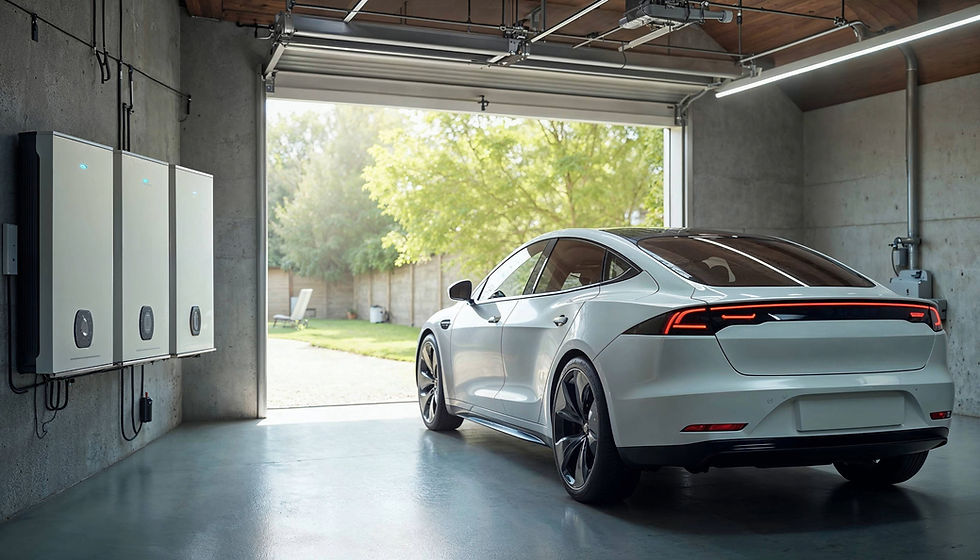
Battery storage can also be accounted for under the current EPC assessment methodology when it is connected to a solar PV system and supported by the necessary evidence.
However, solar panels will usually produce the more significant EPC improvement. This is because solar panels generate renewable electricity, while the battery stores electricity so that it can be used at a more suitable time.
The combination of solar panels and battery storage can therefore help make a property more energy efficient in practice while also contributing to its calculated energy performance.
Keep your solar-panel and battery documents

An EPC assessor must have suitable evidence before entering the full technical details of a solar-panel or battery-storage system.
Homeowners should retain:
The MCS installation certificate
The installer’s invoice
Commissioning certificates
Solar-panel specifications
Inverter specifications
Battery make, model and capacity
Documents confirming the system’s rated output
Any relevant guarantees or warranties
If sufficient evidence is unavailable, the assessor may be unable to include all the system details within the EPC assessment. Keeping the paperwork safe can therefore be extremely important when the property is assessed, sold or let.
Can solar panels increase property value?
Solar panels may make a property more attractive to buyers, particularly where they provide lower electricity costs and contribute to a better EPC rating.
A higher EPC rating can help:
Demonstrate that the property is energy efficient
Give buyers a clearer indication of likely energy costs
Improve the marketability of the home
Support eligibility for certain green mortgage products
Reduce the improvements a future owner may need to complete
Make a rental property more attractive to tenants
Help landlords prepare for future energy-efficiency requirements
The effect on property value will vary, but an efficient, properly documented solar system can be an appealing feature for energy-conscious buyers.
What affects solar-panel performance?

Not every roof will achieve the same results. Before installing solar panels, the installer should consider the available roof area, orientation, pitch and any possible overshading.
Solar-panel performance can be affected by:
Roof direction
South-facing roofs normally generate the most electricity over the year. Southeast- and southwest-facing roofs can also perform extremely well, while east- and west-facing systems remain suitable for many homes.
Roof pitch
The angle of the panels affects how much daylight they receive throughout the year. Your installer should calculate the most suitable arrangement for the individual property.
Overshading
Trees, chimneys, neighbouring buildings and roof features can reduce output. Even partial shading may affect performance, although modern optimisers and microinverters can sometimes reduce its impact.
Solar-panel coverage
A larger system will generally generate more electricity, provided the roof is suitable. It can also have a greater positive effect on the EPC rating.
Household electricity usage
Homes that use electricity during the daytime can consume more solar energy directly. Households with higher evening use may gain more benefit from battery storage.
Should I install solar panels, a battery or both?
The best option depends on your budget and how your household uses electricity.
Solar panels alone may offer the most straightforward financial return, particularly if somebody is normally at home during the day. Adding a battery could provide greater savings where most electricity is used during the evening or where a time-of-use tariff is available.
If you are considering both, obtaining a combined quotation may be worthwhile. Installing a battery at the same time as the solar panels can sometimes be more economical than adding one later.
Always obtain several quotations from reputable, appropriately certified installers. The system should be designed around your property and actual electricity use—not simply based on the largest number of panels or biggest battery available.
Are solar panels and battery storage worth getting?

For many homeowners, solar panels are a worthwhile long-term investment. They can reduce electricity bills, lower reliance on the National Grid, decrease carbon emissions and dramatically improve the property’s EPC rating.
Battery storage can make a solar-panel system more useful by allowing generated electricity to be saved for the evening. However, whether a battery represents good financial value will depend on the installation cost, electricity tariff and household usage pattern.
If improving the EPC is one of your main reasons for installing solar panels, it can be useful to seek professional advice beforehand. An EPC assessment can identify your current score, show how close the property is to the next rating band and highlight other improvements that may offer good value.
EPC assessments across Bury St Edmunds, Suffolk and East Anglia
EcoRate Anglia provides professional domestic EPC assessments and practical energy-efficiency advice throughout:
Bury St Edmunds
Newmarket
Stowmarket
Thetford
Sudbury
Ipswich
Cambridge
Ely
Suffolk
Norfolk
Cambridgeshire
Essex
Whether you already have solar panels, are considering battery storage or want to find the most effective way to improve your EPC rating, EcoRate Anglia can assess your property and explain which improvements are likely to make the greatest difference.
Contact EcoRate Anglia today to book an EPC assessment in Bury St Edmunds, Suffolk or elsewhere across East Anglia.


Comments